
In Conversation with Ricardo Franassovici
I had the pleasure of speaking with a legend of high-end audio, Ricardo Franassovici, in the Soundstage Hi-Fi listening room last month! In our 20-minute interview, we explore what defines a world-class hi-fi system, and why a love of music combined with decades of expertise matters as much as the equipment itself.
Together, we discuss the philosophy, heritage, and stories behind our favourite brands such as dCS, Dan D’Agostino & Wilson Audio, the importance of carefully matched hi-fi systems, and how great audio can shift listeners from analysing high-fidelity sound to feeling emotionally connected to the music.
Watch the video above, or read the full transcript below. Enjoy!

Dean: Ricardo, welcome.
Ricardo: Thank you.
D: Thank you for taking the time to come and see us. We're very proud to have our new demonstration system finally installed in the listening room, which consists of the Wilson Audio Sabrina V - wonderful loudspeakers - the Pendulum by Dan D’Agostino integrated amplifier, and the dCS LINA DAC X.
R: A well-matched system.
D: Thank you very much.
R: And thank you for welcoming me here.
D: It's good to have you.
R: As you know, at Absolute Sounds, we're quite selective when it comes to choosing new partners because we believe that, when buying, we need some experience from the partner so they can carry this message of good high-end systems.
R: Soundstage was the ideal partner for us in North London. You have a big job because you’ve got a large area to cater for.
D: Of course…

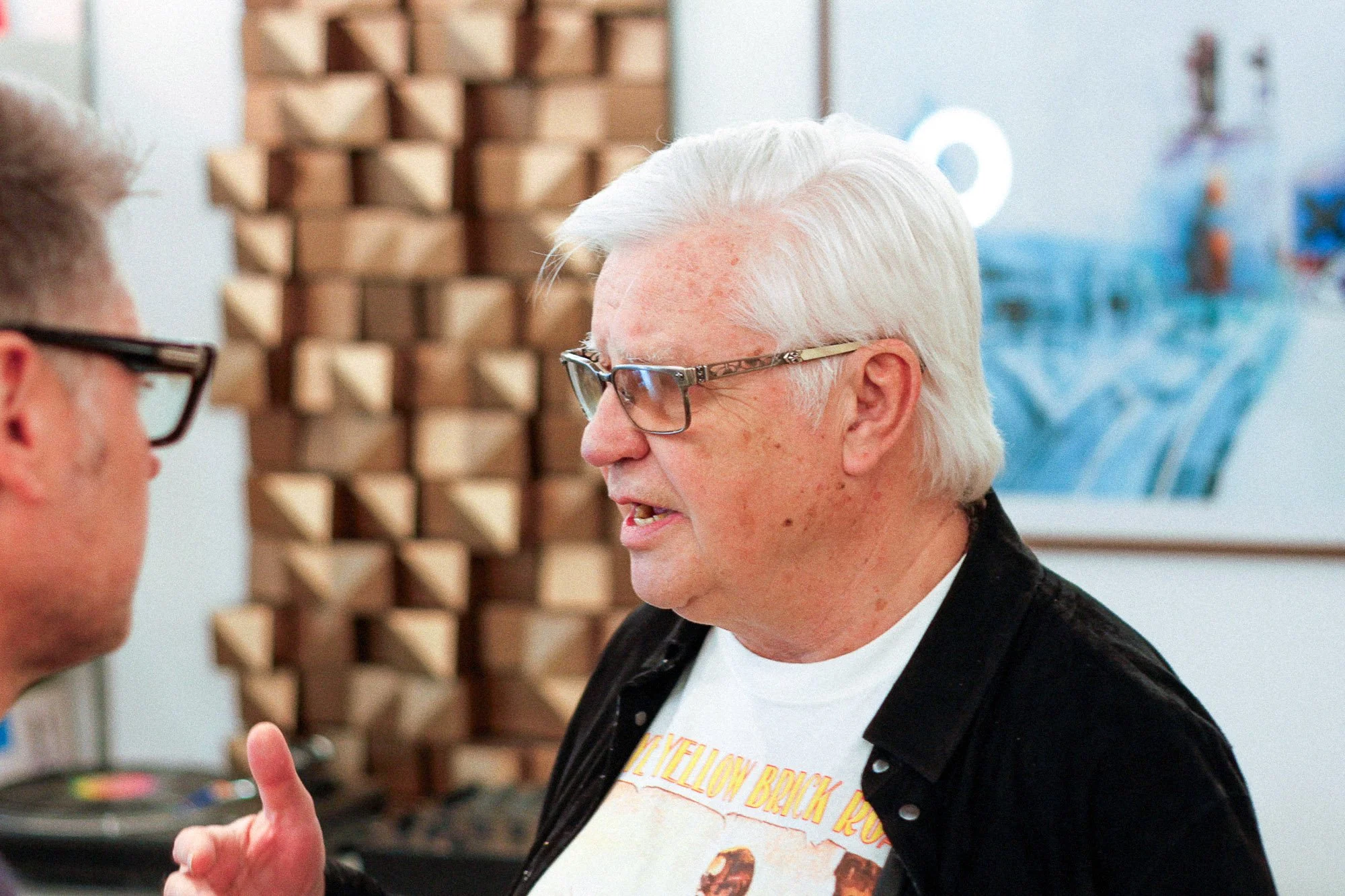
Dean chats with Ricardo Franassovici at Soundstage Hi-Fi
R: But the importance of selecting a good partner is significant because people think, “Oh, I’ve heard the Wilson is a fantastic loudspeaker - let me go and buy one.” That’s only part of the buying process. The whole process is about engaging with the consultant so they can help tune it to your liking at home. That knowledge is unique. That’s why we have very few consultant partners: you need those skills to sell this type of equipment and deliver the full message, which is music in the home in the proper way - not in the iPhone way, not in a little Bluetooth way, but in a proper way that brings beautiful benefits.
D: Absolutely. We take a lot of time to consider the customer’s space and what’s right for them. Well-matched components and positioning of loudspeakers is crucial.
R: Which you have the skills for now because you’re Wilson-specific.
D: I went to the factory…
R: …and obviously all your history, because I believe you’ve been going for quite some time.
D: Yeah. Since 1978. Over 40 years of experience.
R: You look very young considering that. I discovered Absolute Sounds in 1978.
D: Well, my father opened the original store in ’78 when I was five. I’ve always been around the store. If we can talk about the products we’ve selected for our demonstration system and what we’re proud to represent today, let’s start with Wilson Audio loudspeakers.
R: We'll start at the end of the system: Wilson Audio. I’ve been with this company since the early ’80s.
D: Right.
R: David Wilson is probably the founder of the concept of high-end audio loudspeakers. His obsession came from a sentimental place. He was really a recording engineer - scientist at the same time - and he wanted to record his wife, whom he loved very much. She’s no longer with us. And so Wilson Audio was created out of a romance, effectively, because he wanted to reproduce the proper sound of the human voice when monitoring recordings.
He was extremely knowledgeable and influenced the whole high-end audio industry. When he came into the market with his big “Master WAMM,” the original WAMM loudspeaker, everybody thought it was an experiment. Now everyone has super high-end loudspeakers.
D: Yeah, of course. Can you remember hearing your first pair of Wilsons and what you thought?
R: Well, the first pair was the little WATTs on their own. Completely overtaking. You have to remember that Absolute Sounds was created as a sequence to my big presence in the rock industry. My criteria for good sound at home might be slightly different from others: it was about how to bring that live moment back into the home.
D: Absolutely.
R: And because it’s a great pleasure - it’s a great privilege - you can have that in your home. That effect I heard the first time listening to the WATTs… Wow! The voice of that lady was articulate, sensual - it was a really emotional connection.
D: Absolutely. I was very fortunate to go to the factory to meet Daryl, David’s son, who now looks after the company. We talked about the head and the heart with Wilson: it’s technically advanced, with all the materials and precision engineering, but there’s also an emotional connection - the heart as well. For me, Wilson represents the head and the heart. It has the technicality, but it also conveys emotion.
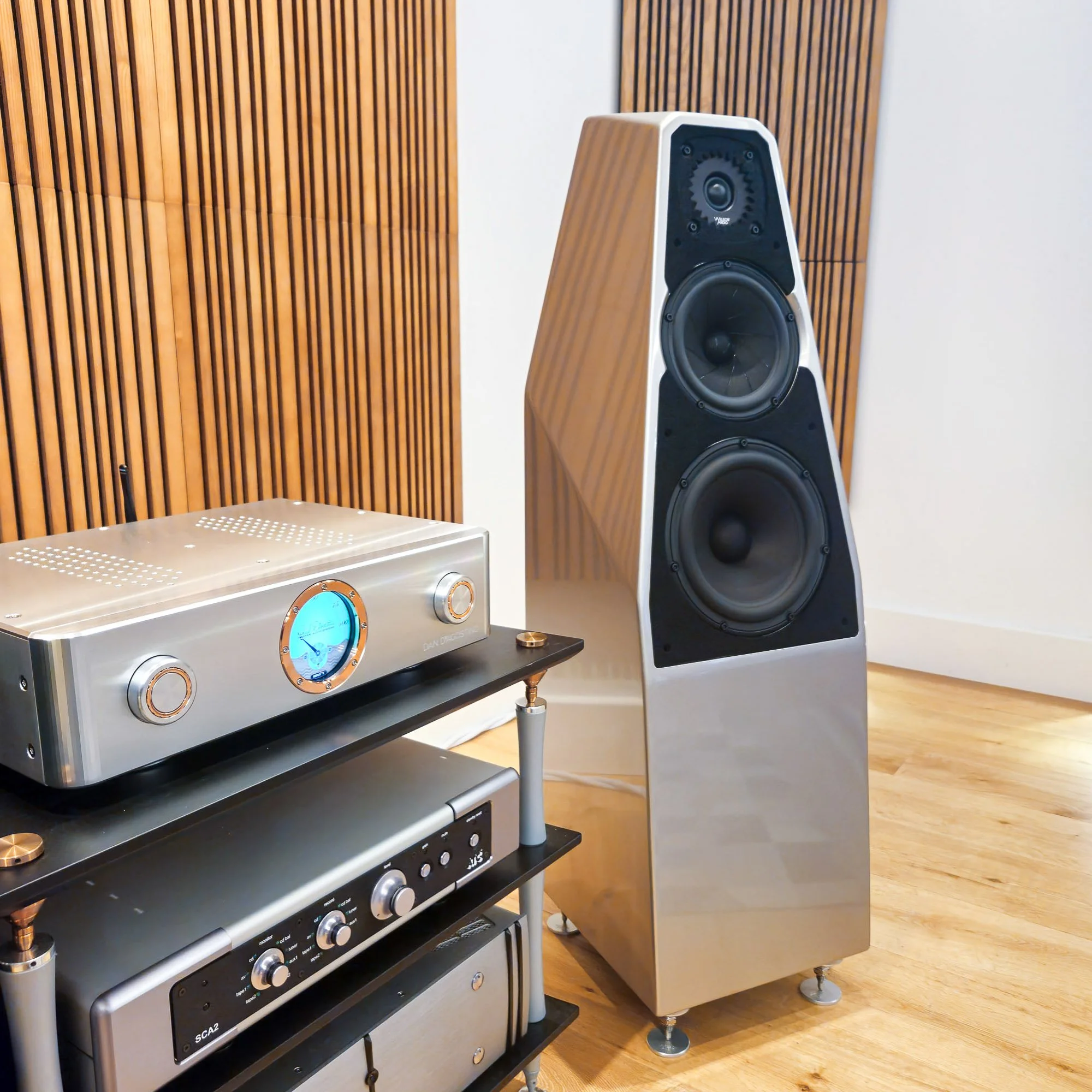
Wilson Audio Sabrina V Loudspeaker & Dan D’Agostino Pendulum Integrated Amp
“People don’t always have the space for separates…the D’Agostino Pendulum is a one-stop solution that gives incredible results.”
Ricardo: And it was very disciplined, too. Coming from the rock industry, my reference was what I heard live. David made a point to go to Vienna every year to listen to live performances, so that we don’t get trapped in hi-fi jargon. “What is the air? What is the structure?”—he put that into his speakers. There was always that incredible combination of science and music.
Another point I’d like to make: the suppliers you carry here today are specific to their domain in the industry. I believe that’s very important. I don’t think loudspeaker companies should make amplifiers as well. You have Wilson Audio loudspeakers, D’Agostino amplification, and dCS for digital—the only dedicated digital company.
Dean: Absolutely. And moving on to D’Agostino, you mentioned the Pendulum. There’s a great synergy between D’Agostino amplification and Wilson Audio loudspeakers. Could you talk us through your relationship with that?
R: That’s part of this: you, as a great consultant, are in a race. We go around the circle and pass the relay.
D: The relay - you’re the last part of passing on the baton.
R: Yes. And the beginning, in the case of these companies, is the ability for them to experiment over a period of time. You don’t become a Formula 1 car the first year. Many years of refining the combination - that’s a well-known pairing: digital dCS, D’Agostino amplification.
R: We were probably the very first Europeans, with my colleague in Germany, to carry Krell amplifiers. Krell were legendary, even here in England, though they are no longer active. But Dan D’Agostino is a real character in the high-end world: very opinionated, but with great results. At Absolute Sounds, we still service Krell amplifiers, and clients don’t want to swap them - they realise they bought something extraordinary.
Dan left Krell, moved to Arizona, and founded D’Agostino with all the knowledge he carried from the past. So again, we’re talking about a company founded in the ’80s with a lot of high-end experience. At Absolute Sounds, when it comes to big systems - really big loudspeaker systems - there’s no other choice than that type of amplification. The reason is not only the music but also the ability to reinforce the foundation of the music - the solidity, the space, the sense of realism.
With the Pendulum, we have an incredibly fantastic solution.
D: I mean, the form factor is phenomenal, isn’t it?
R: People don’t always have the space for separates. This is a one-stop solution that gives incredible results.
D: I spoke to Dan at the high-end audio show in Munich when they were launching the Pendulum. He wanted to bring that big-scale system into something that would fit in most living rooms, and I think the Pendulum delivers phenomenally.
R: Phenomenal, even compared to some European integrated systems. It’s still incredibly good value for money.
D: This model here has the internal DAC streamer and internal phono stage - a one-stop solution. You could even have a Linn on there.
R: You could have a Linn on there…
D: Which we have done for a customer.
R: And then, obviously, LINA is a refinement of the digital side.
D: We always talk about source first, but in this conversation, we’ll cover source last: dCS LINA DAC X.
R: Oh, dCS. What a company. Again, a fantastic story: they’ve been in the UK for many years, responsible for a lot of early studio work, first in digital audio. It’s a proper digital company, focused entirely on high-end audio digital. No claims on loudspeakers or amplifiers, just fully dedicated with a proper team of engineers.
The problem with DACs over the years is that during the transition from analogue to digital, people wanted DACs to sound like their turntables. That’s a big mistake - it’s almost sacrilegious. Digital is digital, and dCS does it properly. I personally use a LINA DAC X in my studio as a reference. With dCS, the customer enters a story, and they look after you over the years. Products don’t change regularly, and upgrades let you benefit - if you bought a Vivaldi 10 or 12 years ago, you now get the latest APEX, making the machine identical to a new one. That’s a tremendous commitment.
R: My reference has always been the music I heard outside the home, not hi-fi. dCS does it better than anyone. It’s no accident - if you go to the factory, you’ll see a lot of engineers.
D: When I visited the dCS factory, it was like visiting a Formula 1 team. The precision, the facilities, the obsession with detail - it’s phenomenal.
R: At the start, some thought they could buy a DAC chip, but that was a big mistake. In 2026, I think you can proudly tell clients there is digital and analogue, and both have their virtues.
D: Absolutely. A few years ago, customers were polarised: analogue or digital. Now, with dCS, we see people using both front ends.
R: My advice: it’s no longer Newcastle vs. Manchester City. Enjoy in different ways at different times of day. Streaming is convenient; in the evening, you might listen more to analogue. It shouldn’t be one against the other.
D: No, as an Arsenal fan, I’d say it’s more of a cultured approach.
D: Exactly. You’re in North London, Ricardo - you can’t mention Man City. But it’s great to have the products here. We’re proud of our association with Absolute Sounds.
Ricardo: I want to stress how we choose consultants. All our companies share a strong connection to music. David Wilson, Dan D’Agostino, and dCS - all share that thread.
Dean: Music is at the forefront.
R: Music is very important. Over 50 years, we’ve seen that overly engineered companies obsess with engineering, not music. You need a combination of engineering and a great love for music.
D: That’s why customers invest in a high-end system: they work hard, come home, and want to relax and enjoy music.
R: In 2026, the world can bring a well-being effect into the home, plus pride of ownership. Enzo Ferrari said that when he had a fantastic team, he built cars as a reward for their hard work. I see high-end audio the same way: you’ve worked hard, now you own something that makes you feel good.
D: Absolutely. There’s a part of ownership, isn’t there?
R: Nowadays, we encourage something different than the general audiophile: don’t just sit in the centre position, alone, appreciating. Share it. Enjoy it. Sometimes the system sounds great two rooms away. Music should be shareable with friends and family. It’s a much more enjoyable experience.
R: If it’s really good, the mind doesn’t filter anymore.
D: Filtering?
R: Analysing, saying, “How is this? How is that?” It doesn’t happen. The music takes you over and makes you feel good. Scientifically, it has proven well-being effects.
D: I’ve received lovely feedback from customers over the years: their systems bring calm and pleasure.
R: That’s probably why you’re our partner.
D: No, it’s great to understand. Listening engages a different part of the brain.

Dean & Ricardo watched over by Aphex Twin
R: I hope I’m not throwing a curveball, but you’ve got a lot of experience.
D: Yes.
R: We find younger salespeople lack that content. What advice would you give them?
D: The foundation is a love for music. Music always comes first; equipment is a vehicle to get closer to the artist you love. A great system is like a time machine: it can take you to any performance you want. Combine love for music with understanding engineering - head and heart - and you’re on your way to designing great systems.
R: Exactly. The feel-good effect is so important. So much high-end audio fails at that.
D: When you walk into a room, the system should sound good immediately.
R: Especially for professionals, instincts are vital. Filter too much, and it doesn’t work.
D: Exactly. Years of listening, experimenting, and building relationships with complementary components are vital.
R: We’re like a bunch of master chefs.
D: Exactly…Consumers will never know as much as we do; this is our job. Alan Sircom from Hi-Fi+ said: “Dean, you’re like an audio mixologist, making cocktails with hi-fi.”
D: It’s great to work with D’Agostino, dCS, and Wilson Audio. Thanks again for your time.
R: I’ll finish on a note: if the music system is good enough, you’re very close to the live event feeling at home. Karen Sumner from Transparent Audio proved this with her piano collection: she stayed home because her system delivered better interpretations than concerts in New York. That shows the pleasure a good system can bring - something that wasn’t possible 5–10 years ago, but is now.
D: Absolutely. Well, let’s take a listen to the system. Ricardo, thank you so much.
R: Thanks.
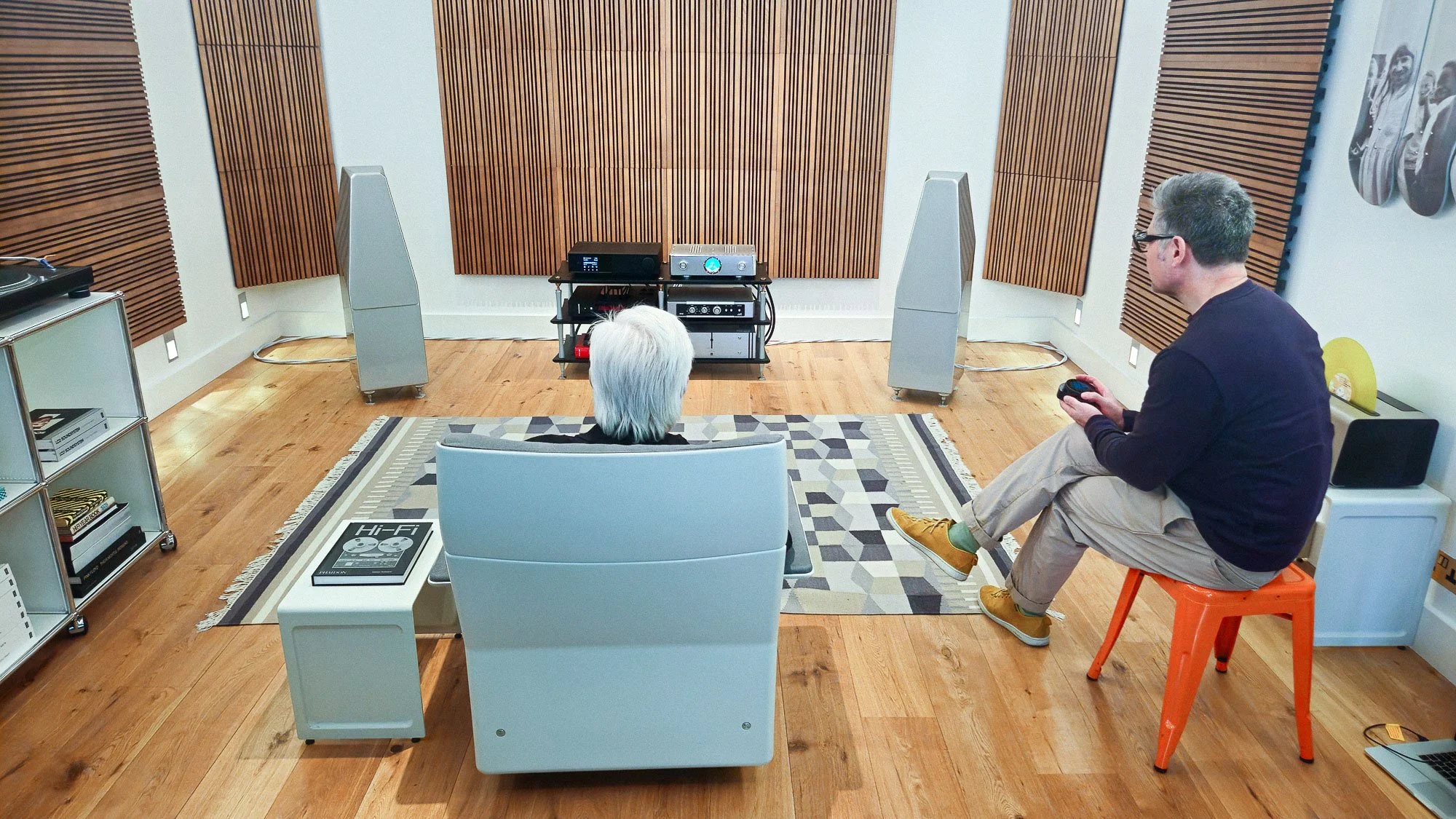
Ricardo & Dean enjoy the combination of Pendulum & SabrinaV in our high-end Listening Room